
Burning Man Opens Sunday and Turns Pets Away at the Gate. The Boarding Requirements Take Longer Than Most People Think.
Black Rock City bans pets outright — and the same lead time problem applies to Labor Day weekend. Kennel cough and dog flu vaccines need days to weeks to do anything, not hours.
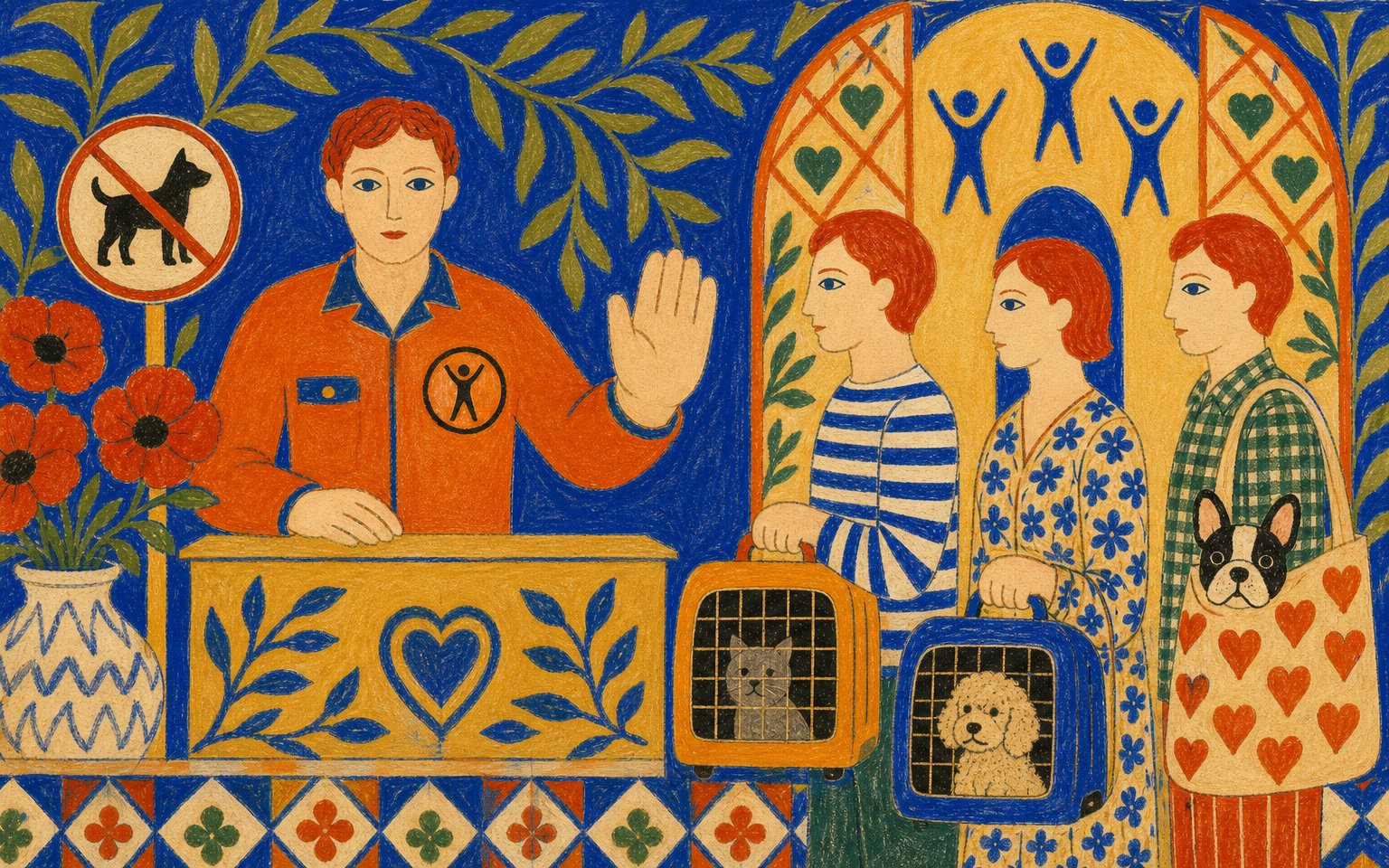
Black Rock City goes up tomorrow. Burning Man 2026 runs August 30 through September 7 under the theme "Axis Mundi," and among the many things the desert does not accommodate is your dog. [1]
The event's position is blunt: pets are prohibited, and people who show up with one are turned away at the gate. Burning Man's own explanation is that "the combination of loud noises, unforgiving environment, and unpredictable conditions beyond the trash fence makes it a terrible idea for all concerned, especially the pet." [2] They also point out the practical trap — you are now several hours from Reno with an animal, during a week when every kennel within range is full. [2]
Which is the useful part for everyone not going to the desert. The same lead time problem shows up for anyone traveling over Labor Day weekend, and it catches people every year.
The vaccines are the bottleneck
Most boarding facilities require proof of rabies, distemper/parvo, and Bordetella, and an increasing number ask for canine influenza. What owners tend to miss is that these have to be given early enough to work — a shot administered on drop-off morning is a receipt, not protection.
Bordetella (kennel cough). The intranasal and oral forms produce protection in roughly three to five days; the injectable version needs at least five days after the second dose, and those doses are given weeks apart. [3] Vets generally consider the nasal and oral routes faster-acting and longer-lasting, with immunity of at least 12 months, versus a shorter window for the injectable. [3] Facilities often want it given no less than a week before arrival, and some want it within the past six months rather than the past year.
Canine influenza. This one needs real planning. The initial series is two doses given two to four weeks apart, with annual boosters after that. [4] A dog who has never had it cannot be fully covered for a trip a week from now. Expect roughly $30 to $75 per dose. [4]
Neither vaccine is a force field. The Bordetella vaccine targets one bacterium among the several bugs that cause the syndrome we call kennel cough, and its realistic value is reducing severity, shortening the illness, lowering the odds of progression to pneumonia, and making an infected dog less contagious to everyone else in the building. [3] The flu vaccine works similarly — vaccinated dogs shed virus for less time and get less sick, rather than being immune. [4]
So a dog can come home from a well-run facility with a cough. That isn't proof the kennel was negligent, and it isn't proof the vaccine failed.
Booking, in order
Call the facility first, then the vet. Requirements vary more than people expect — some want influenza, some want a fecal test, some have a hard cutoff on how recently Bordetella was given. Get the actual list before you book the vet appointment, so you're only doing this once.
Ask what happens when something goes wrong. Who is on-site overnight, and are they awake? Which emergency clinic do they use, and how far is it? What's the ratio of staff to animals during the day? Will they give medication, and is there a fee? A facility that answers these easily has been asked before.
Visit, if you can, unannounced-ish. Ask to see where dogs actually sleep, not just the lobby. Smell is informative. So is noise level — constant frantic barking suggests dogs who aren't coping.
For cats, consider not moving them at all. Cats are usually less stressed by a sitter coming to the house than by relocation to an unfamiliar building with other animals in it. A cat's tolerance for novelty is famously narrow.
What to leave behind
Write it down rather than saying it at the door. A single page taped to the fridge or handed over at drop-off:
- Feeding amounts and times, in units the sitter can measure without guessing
- Medications, doses, timing, and what happens if a dose is missed
- Your vet's name, address, and phone; the nearest emergency clinic
- A written authorization for treatment with a spending limit, so nobody stalls at 2 a.m. waiting for you to answer
- Two human contacts besides you — someone local who can physically show up
- Quirks that matter: bolts through open doors, resource guards food, hates the vacuum, cannot be left with rawhide
- A current photo of your pet, on the page
And check your contact details are current where they matter — on the collar tag, with the boarding facility, and in your pet's microchip registry. If your dog does slip a leash at a strange facility in a strange neighborhood, the phone number attached to that chip needs to be one that rings your actual phone this week. It takes about five minutes to verify and it's the kind of thing that's only ever checked too late.
If you're leaving this weekend
Some of this is already tight. If your dog hasn't had Bordetella, ask the vet about the intranasal form and be honest with the facility about the timing. If they refuse, that's a reasonable call on their part — they're protecting the other twenty dogs in the building.
And if a boarding spot has genuinely run out, a trusted in-home sitter is not a downgrade. For many dogs, it may be the better option regardless: same house, same smells, same couch, one new person, instead of everything new at once.
Sources
- "Black Rock City 2026," Burning Man Project.
- "Pets at Burning Man," Burning Man Project.
- "Bordetella Vaccine: What to Know About the Vaccine for Dogs," American Kennel Club.
- "Canine Influenza Vaccine: What Is It, and Does Your Dog Need It?," PetMD; "Canine influenza: Veterinary resources," American Veterinary Medical Association.