
How to Protect Your Dog During a Tornado
When the sky turns dangerous, your dog depends on you. Here’s a practical, step-by-step plan to protect your pup before, during, and after a tornado.
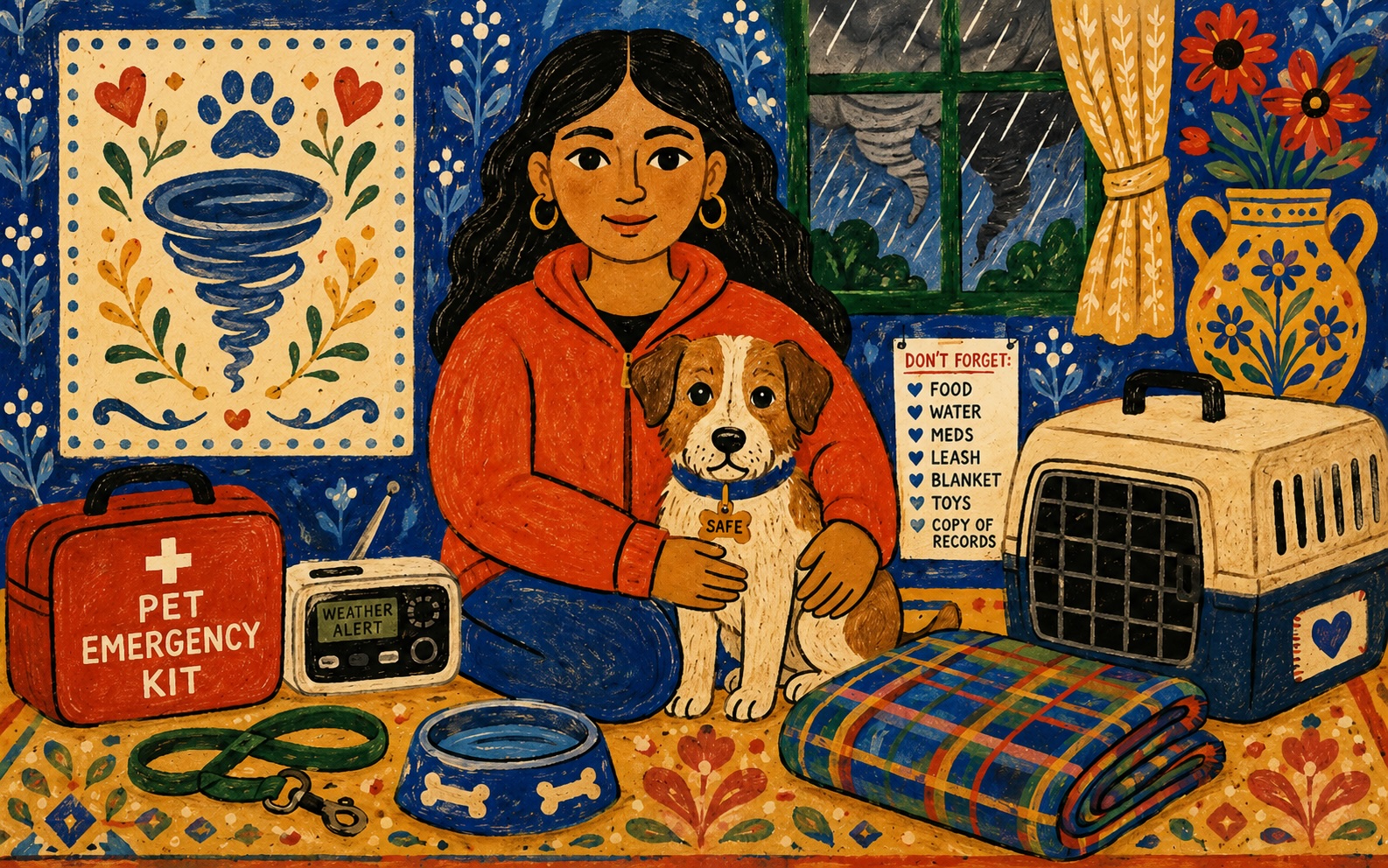
When sirens wail and skies turn ominous, your dog looks to you for safety and reassurance. Tornadoes can strike fast, leaving little time to think—so planning ahead is the best way to protect your pup. This guide covers what to do before, during, and after a tornado to keep your dog safe, calm, and accounted for.
Before the Storm: Preparation is Everything
Preparedness reduces panic and saves lives. Start now:
1) Create a Pet Emergency Kit
Pack a grab-and-go kit and store it near your safe room.
- 3–7 days of food in airtight containers and a manual can opener if needed
- Bottled water (at least 1 gallon per day for you and your dog combined)
- Collapsible bowls
- Copy of vet records, vaccination history, and a recent photo
- Extra collar, harness, and non-retractable leash
- Medications with a printed dosing schedule
- Pet first-aid kit (gauze, bandages, antihistamines as advised by your vet, tweezers)
- Poop bags, pet-safe wipes, and towels
- Comfort items: favorite toy, blanket, or a worn T-shirt with your scent
- Crate or carrier that your dog is already comfortable using
2) Microchip and ID Tags
If you get separated, identification is your dog’s lifeline.
- Microchip your dog and verify the contact info is current with the registry.
- Keep a sturdy collar with an ID tag listing your name, cell, and an alternate contact.
- Add a QR tag or Apple AirTag/Tile on the collar (as a supplement, not a replacement for microchipping).
3) Designate a Safe Room
The safest place for you is also the safest place for your dog.
- Choose a basement, interior room, or windowless hallway on the lowest floor.
- Clear hazards and store your pet kit, crate, and a flashlight there.
- If you live in a mobile home, identify the nearest sturdy shelter and practice getting there fast.
4) Crate-Train in Advance
A crate offers protection from debris and gives anxious dogs a den-like refuge.
- Make the crate positive: feed meals inside and practice short, calm stays.
- Label the crate with your contact info.
5) Practice Your Plan
Run drills every few months.
- Cue your dog to “safe room” and reward generously for following.
- Practice leashing quickly, loading into the crate, and settling.
- Keep a spare leash by key doors; consider a harness for better control.
6) Know the Forecast
Use multiple alerts to avoid surprises.
- Enable Wireless Emergency Alerts on your phone.
- Install weather apps with tornado warnings; keep a NOAA weather radio with fresh batteries.
During the Tornado: Act Fast, Stay Calm
When a tornado watch turns into a warning, time matters. Here’s what to do:
1) Bring Your Dog Inside Immediately
Don’t wait. Tornadoes can form with little notice.
- Clip on a secure collar/harness and leash before moving to the safe room.
- Never tether your dog outdoors during severe weather.
2) Move to Your Safe Room
- Take your dog’s crate, kit, water, and your phone/radio.
- If you don’t have a crate, position your dog under a sturdy table next to you.
3) Provide Physical Protection
- Keep your dog in the crate if possible; cover the crate with a thick blanket for debris protection while allowing airflow.
- If crated isn’t an option, position your body between your dog and potential debris.
4) Reduce Stress Cues
- Speak calmly; dogs take emotional cues from you.
- Offer a chew, lick mat, or frozen Kong to focus and soothe.
- Use pressure wraps (like a Thundershirt) if your dog finds them calming.
- Play white noise or low music if it helps dampen thunder and sirens.
5) Keep Doors Secure
- Dogs may bolt when startled. Keep the door closed and your dog leashed or crated until the danger passes.
After the Tornado: Safety Isn’t Over Yet
The aftermath can be confusing and dangerous for pets.
1) Assess Before Releasing
- Check for glass, nails, chemicals, downed power lines, and sharp debris before letting your dog move around.
- Keep your dog leashed outside; familiar scents are disrupted and dogs can get lost.
2) Check for Injuries
- Look for cuts, limping, labored breathing, or shock (pale gums, lethargy, fast pulse).
- Contact your vet if you suspect injury or inhalation of dust/debris.
3) Maintain Routine
- Offer water, a small meal, and bathroom breaks.
- Return to normal feeding and walk times as soon as possible; routine reduces anxiety.
4) Watch for Stress Signs
- Pacing, panting, clinginess, accidents, reduced appetite, or sudden reactivity are common.
- Provide a quiet space and enrichment; consult your vet or a trainer if symptoms persist.
5) If You’re Displaced
- Keep your dog with you; many shelters and hotels now accept pets during disasters.
- Bring vaccination proof and your emergency kit. Ask local shelters/hotlines for pet-friendly resources.
Special Considerations
- Puppies and seniors: They tire easily and may chill quickly. Pack extra blankets and pee pads; monitor closely.
- Brachycephalic breeds (e.g., Bulldogs, Pugs): They overheat and struggle with stress. Keep them cool and calm.
- Multi-dog households: Use separate crates if possible to prevent scuffles under stress.
- Medical needs: Pre-pack meds and a written plan (doses, timing, vet contact). Consider a backup pharmacy.
Common Mistakes to Avoid
- Waiting too long to move to the safe room
- Leaving pets outside or tethered
- Relying only on a collar ID without microchipping
- Skipping crate training until the emergency
- Letting your dog roam after the storm without first checking hazards
Build a Community Safety Net
- Share your plan with a neighbor in case you’re away when a warning strikes.
- Place a “Pets Inside” window sticker to alert responders.
- Keep your vet and local animal control numbers in your phone and printed in your kit.
Quick Checklist
- Microchip + updated ID tags
- Pet emergency kit near safe room
- Crate trained and labeled
- Safe room cleared and stocked
- Practice drills every few months
- Multiple weather alert sources enabled
Final Thought
Tornadoes are unpredictable, but your preparation doesn’t have to be. With a stocked kit, a practiced plan, and calm leadership, you can dramatically increase your dog’s safety and comfort when the skies turn dangerous. Start today—so when seconds count, you and your best friend are ready.